What is Dante?
What is Dante?
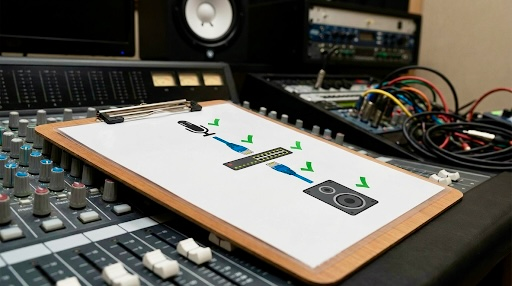
Dante (Digital Audio Network Through Ethernet), developed by Audinate, is a Layer 3 audio networking protocol. It transmits high-quality, uncompressed audio (up to 24-bit/192kHz) and video over standard Ethernet IP networks, replacing traditional analog and digital cables.
1. Key Features & Software Ecosystem
- Performance: Offers ultra-low latency (deterministic) and supports hundreds of channels, making it scalable for everything from small studios to large festivals.
- Usability: Features "Plug-and-Play" device discovery (no manual IP configuration needed initially) and built-in redundancy (seamless failover to secondary networks).
- Dante Controller: Free software for routing signals, naming devices, and monitoring network status/latency.
- Dante Virtual Soundcard (DVS): Software that turns a computer into a Dante interface, allowing direct recording/playback via Ethernet without extra hardware.
2. Technical Architecture: How it Works
Dante combines proprietary software with industry standards to manage signal transport:
- Packetization: Audio/video streams are broken into IP packets containing data, timing, and error correction info.
- Synchronization: Uses PTP (Precision Time Protocol) for sub-microsecond clock accuracy across all devices. It automatically handles sample rate alignment and calculates latency compensation to align playback buffers.
- Error Correction:
- FEC (Forward Error Correction): Adds redundant data to packets to fix errors without re-transmission.
- PLC (Packet Loss Concealment): Algorithmically fills gaps if packets are lost to prevent audible glitches.
- QoS (Quality of Service): Uses tags like DiffServ or IEEE 802.1p to prioritize audio packets over regular data traffic to prevent lag.
- Topology: Supports Star, Daisy-chain, and Ring network layouts.
3. Pros, Cons, and Alternatives
Comparison to Alternatives:
- AVB: Open standard with similar benefits but requires specific switches and has lower adoption.
- CobraNet: Legacy tech; largely replaced by Dante due to latency and channel limits.
- AES67: Interoperability standard; allows Dante to "talk" to other protocols (Ravenna, Q-LAN).
- SDVoE: Focuses specifically on high-bandwidth video (4K/HDR) rather than audio.
4. Troubleshooting Guide
If a system fails, follow this diagnostic path:
- Physical & Link: Check cables, switch ports, and ensure devices are powered.
- Controller Status: Use Dante Controller to identify missing devices or error flags.
- IP Configuration: Ensure all devices are on the same subnet and have unique IP addresses.
- Clocking (Critical): Verify only one device is the "Master Clock" via PTP; check for sync lock errors.
- Network Health:
- Check switch bandwidth and QoS settings.
- Use ping/traceroute to check connectivity.
- Monitor for multicast traffic flooding (IGMP snooping may be required).
Updates: Verify firmware on devices and switches is current.